


September 2026
Discovering Annie is a piece created to celebrate my grandmother’s still ongoing journey through life. For as long as I can remember, Annie, whom I affectionately call Popo, has simply been my maternal grandmother — someone I would turn to when my mother made me angry, and someone I would call every week without fail to ask what she is cooking for Friday's dinner. I have always known Popo for who she is to me, my grandmother. And she’s always known me as Xiao Bu Dian (小不点), a term of endearment for her favourite grandchild (yes, I’ve confirmed my status with her more times than you could ever imagine).
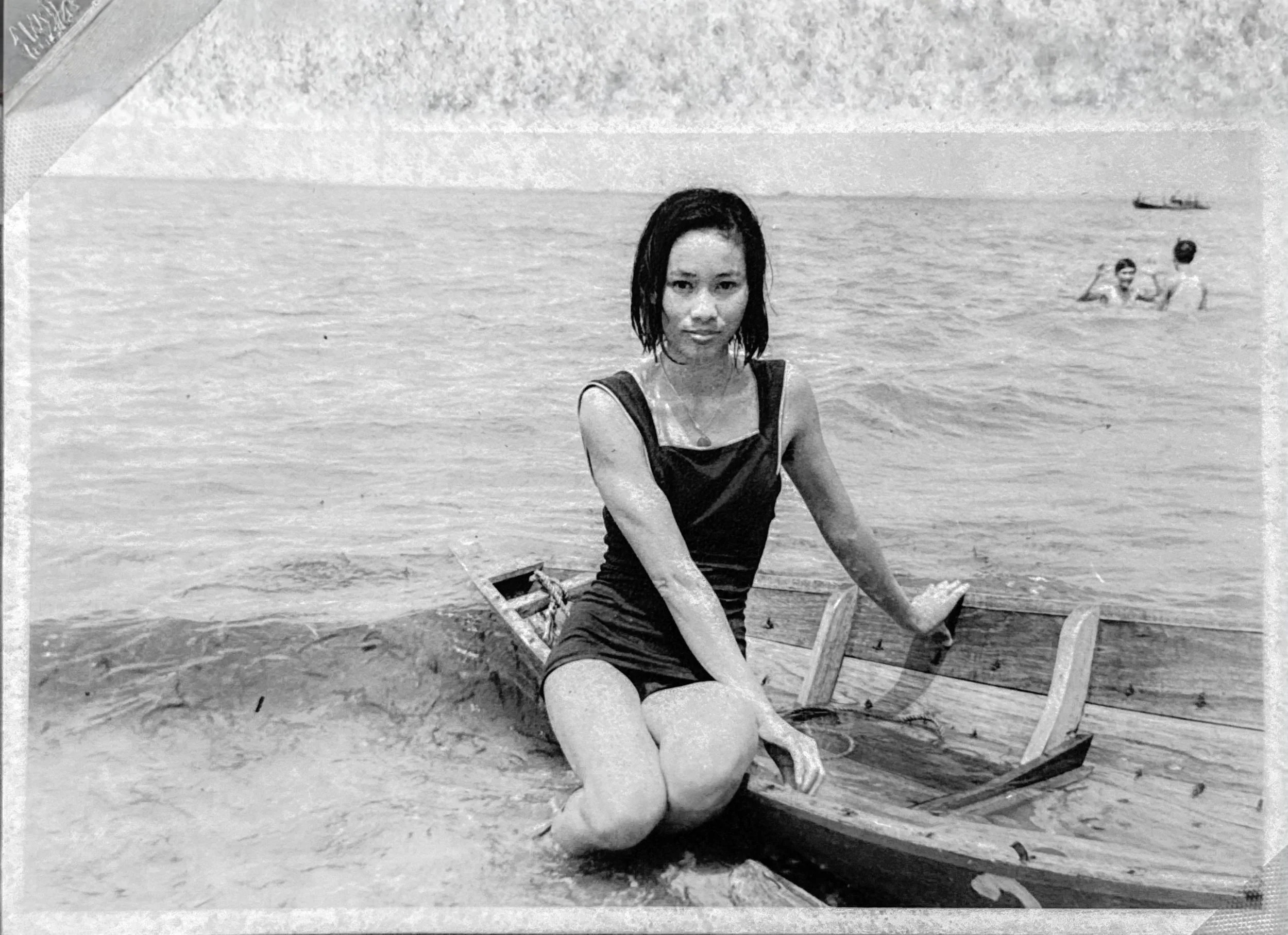
But come to think of it, I have rarely ever wondered what she was like as Annie. As I began looking through her countless photo albums that had been sitting in plain sight in her living room all these years, I discovered sights of her I’ve never seen before. A whole life that existed sixty-four years before mine, and even a name, Annie, that I never knew she went by.
This is my attempt to discover Annie.
We were asked to “…present your understanding of an aspect of “family”, for example contextualising the issues of change and continuity through the decades, exploring culture and heritage through family recipes etc.” Naturally, I began asking myself who in my family I wanted to photograph. I have three grandparents who are still around, so why Popo?
To be honest, she has always been the grandparent I am closest to. (Let’s hope my other grandparents don’t see this…) But there is another reason. In 2020, Popo had a health scare, and I became increasingly conscious that the routines that I had grown accustomed to — Friday dinners and weekly phone calls — would not last forever.
Admittedly, I’ve started compiling some of these pictures since this health scare — way before I started this photography module — as a way to remember her before she leaves. Each time I tried piecing the photographs together, I would give up quickly. It was really strange to turn someone who was very much alive into a memory. I didn’t like that thought.
So some of these photographs remained in my archive. Until now.
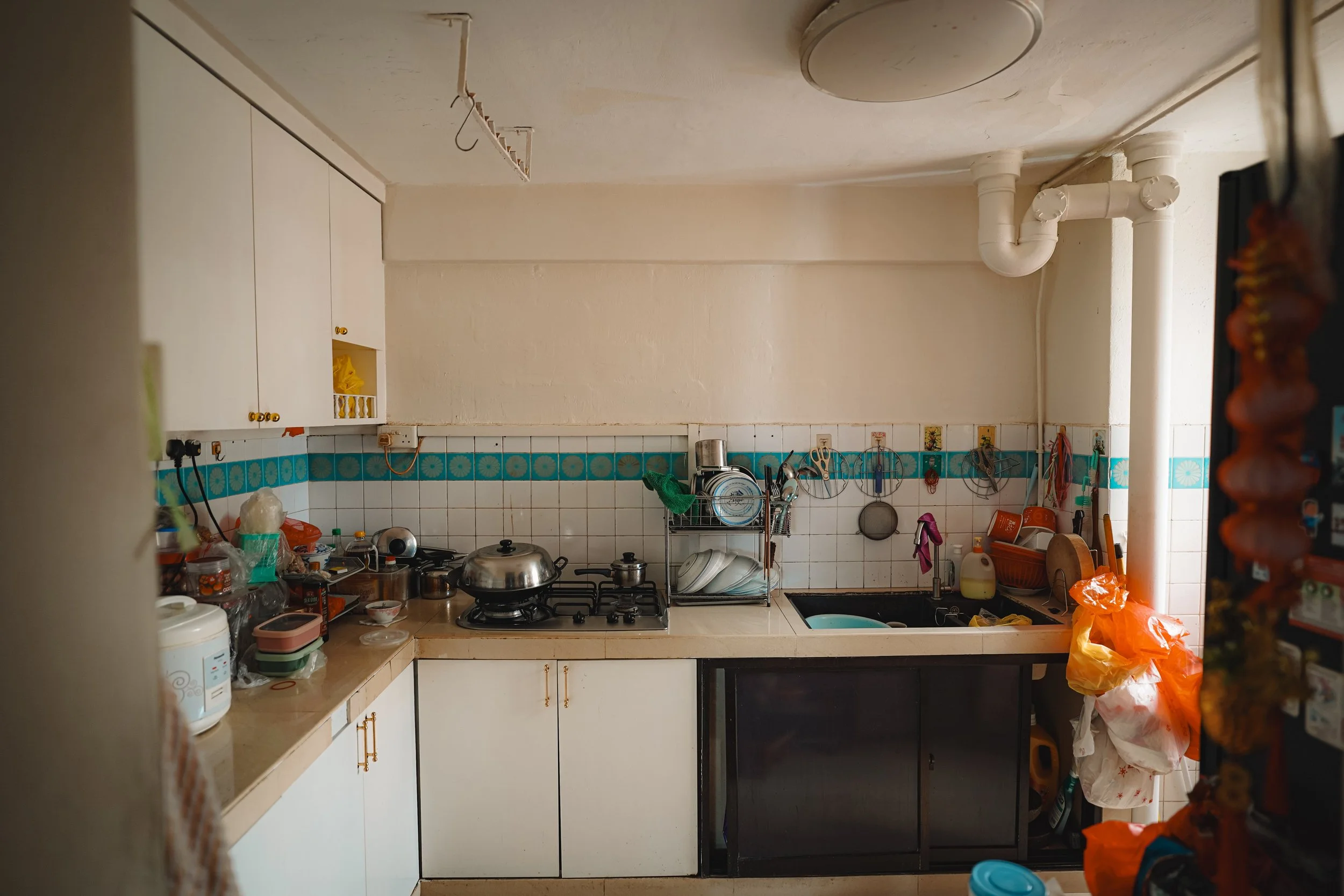
I’ve been trying very hard to understand why my memories of Popo are so deeply attached to the space in which I’ve spent time with her. I understand the concept of place attachment, how our emotional bonds are deeply intertwined with the places that we experience them in, but there is this strange feeling I get when I’m in her home and she’s not there.
In moments like these, I find myself envisioning what the future will be. How this same space would function without her, how life would move on, how people would forget, and how I know I will be remembering for a very long time. It is kind of like an involuntary rehearsal that my mind puts me through in hopes of trying to lessen the emotional burden I will go through when the time comes.
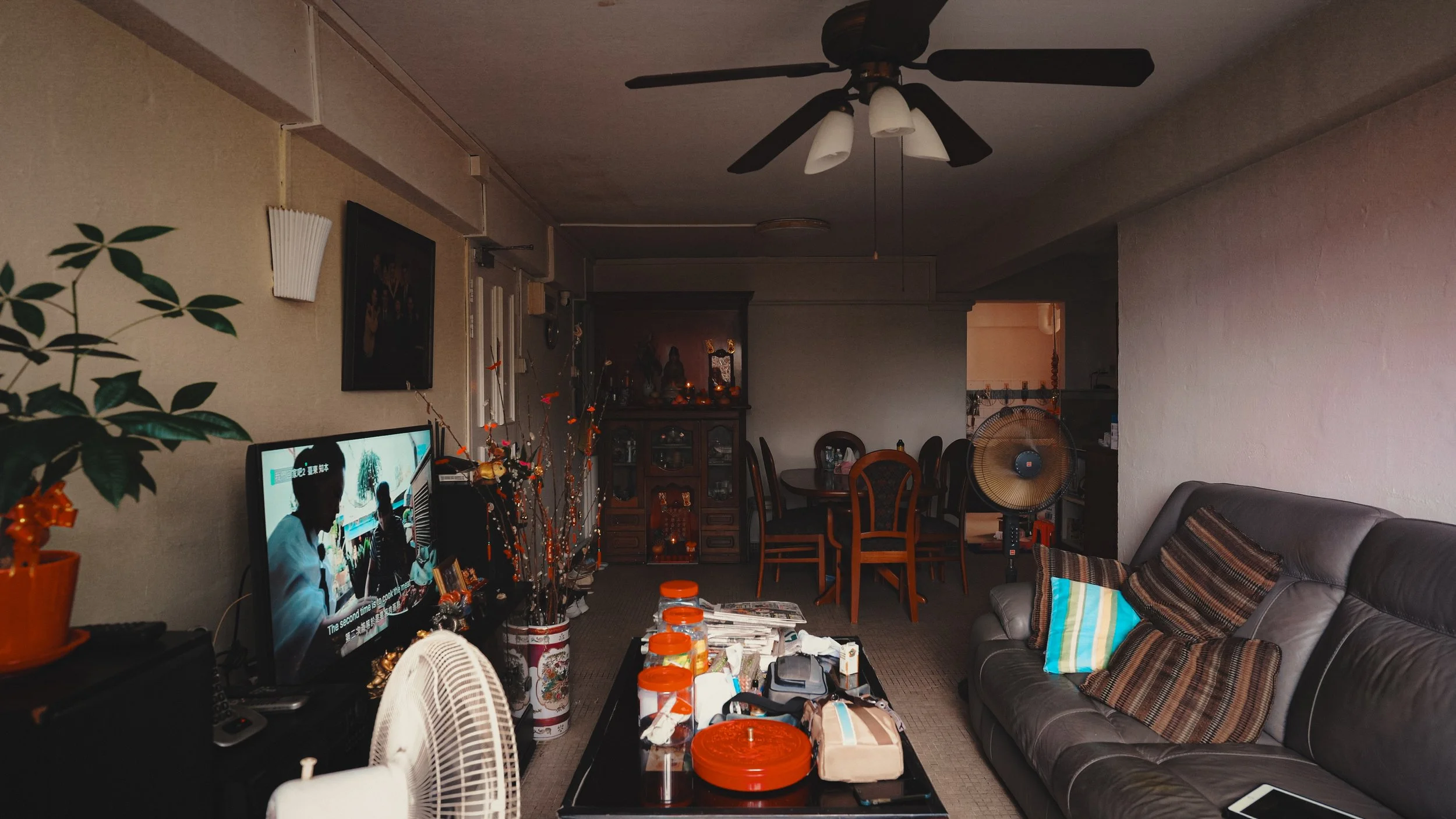
Grandma’s living room
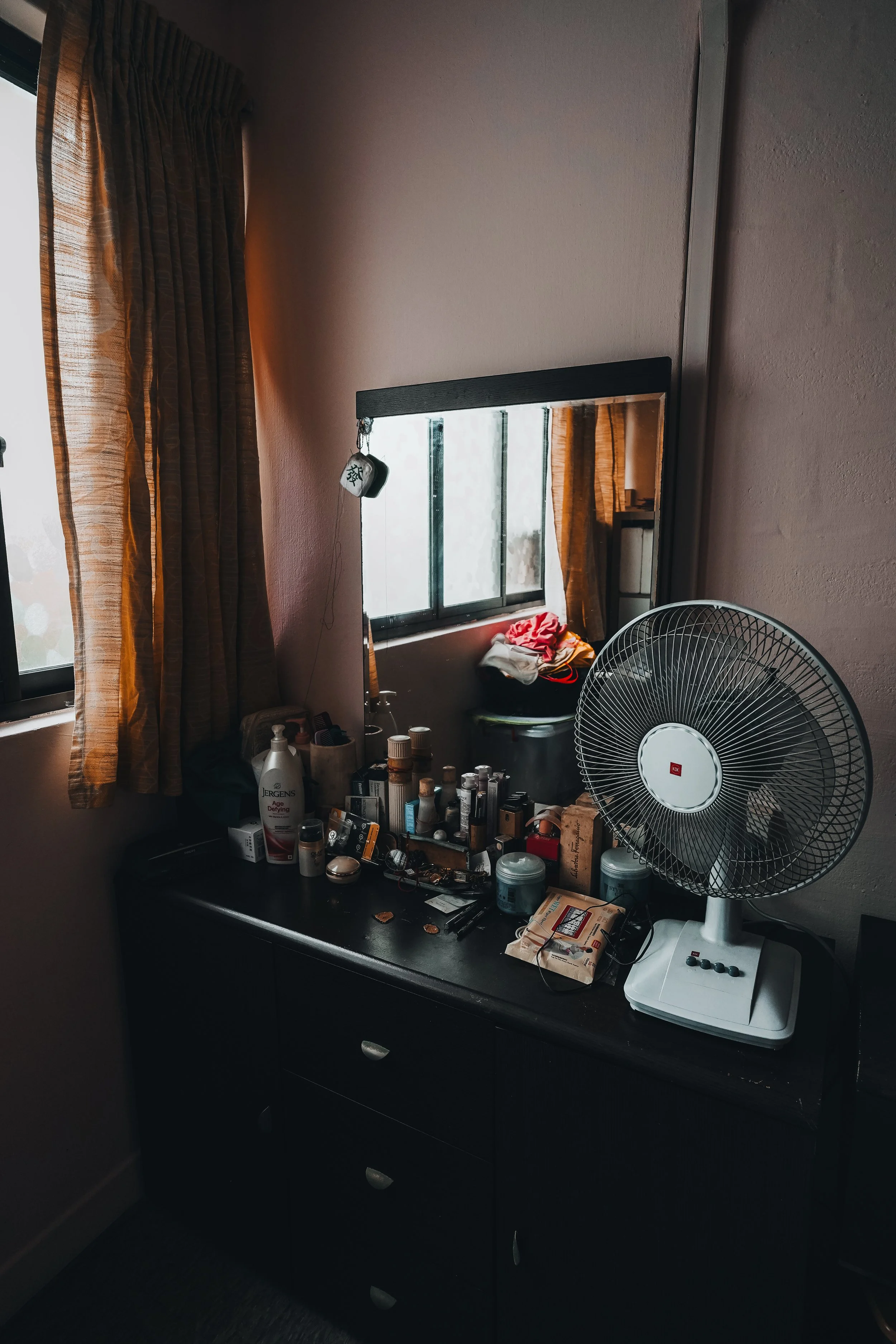
Grandma’s bedroom vanity
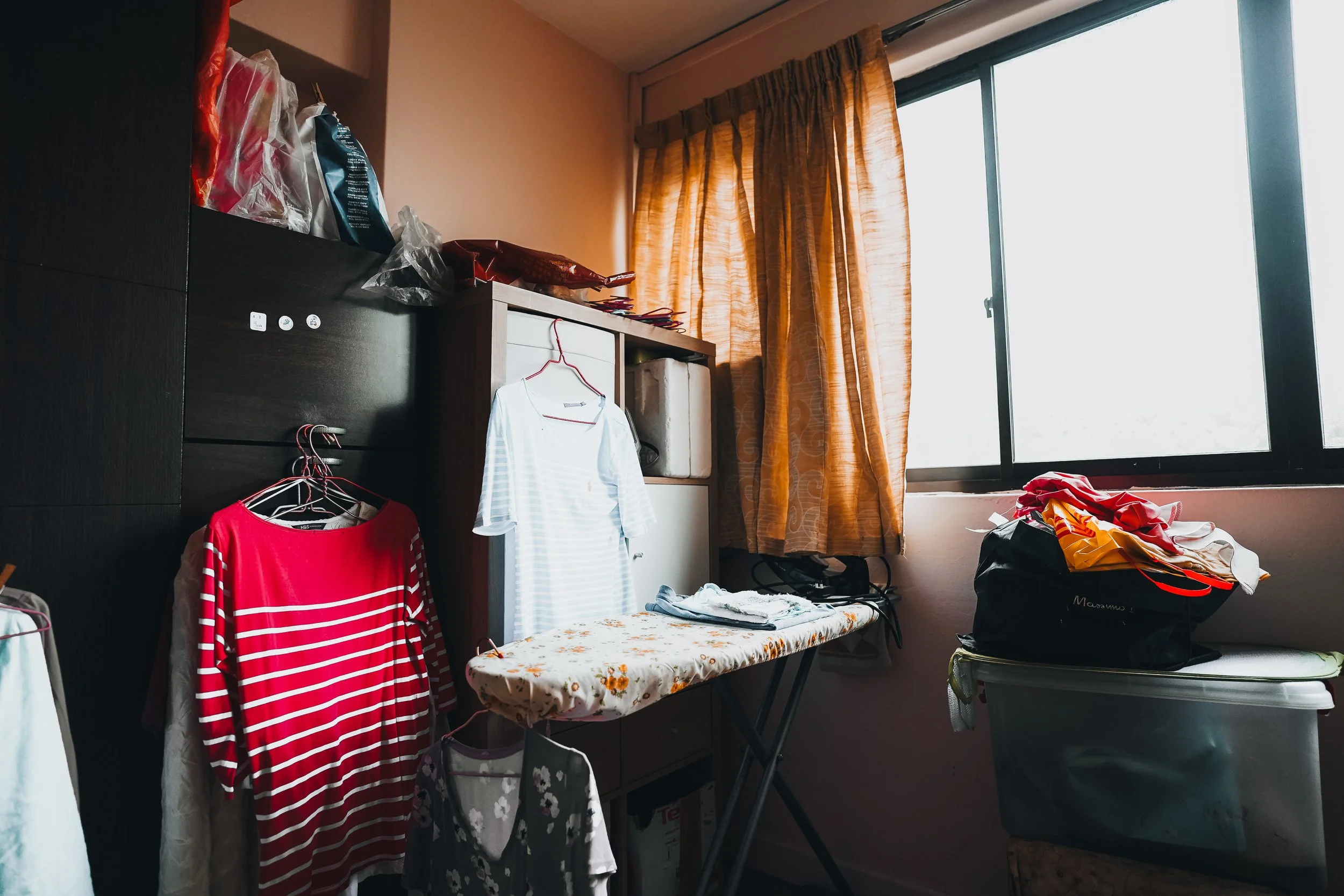
Grandma’s bedroom corner where she does her ironing and folds her clothes
As I walk around her home, I notice the unorganised piles of things she leaves everywhere. Her vanity. Her bed where I used to nap when I was much younger. The blue and yellow cushion that she rests her head on when she’s on the couch. The blue cup that she uses for her afternoon coffee, where each time she’d add two scoops of Anlene. These objects would probably seem very ordinary to you or anyone else, but to me, they are the very things that connect me to her.
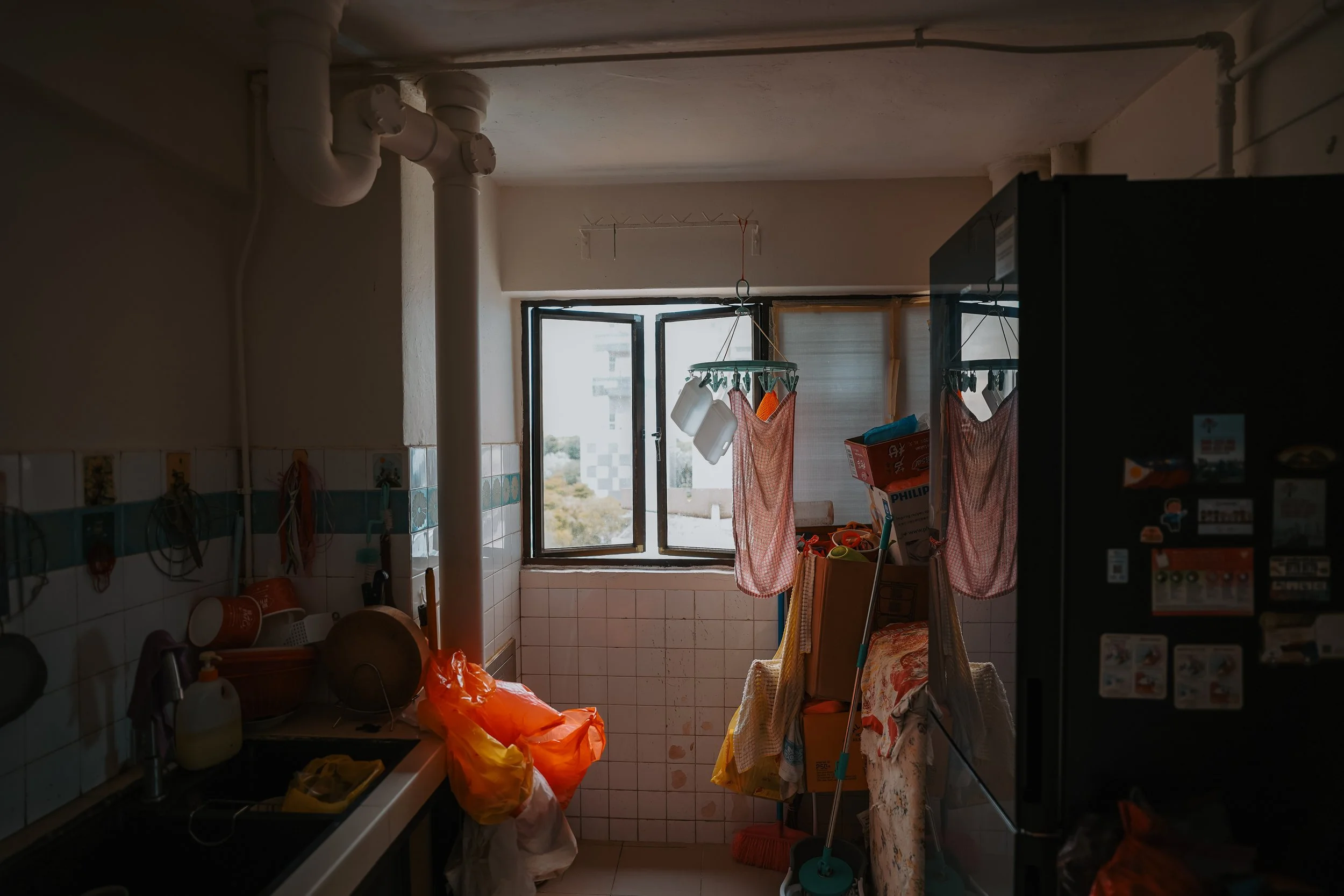
Grandma’s kitchen yard
Yet strangely enough, when she isn't there, these objects seem to lose that warmth. They seem to only serve the purpose of reminding me that she is absent. Maybe what I was attached to was never really the house at all…
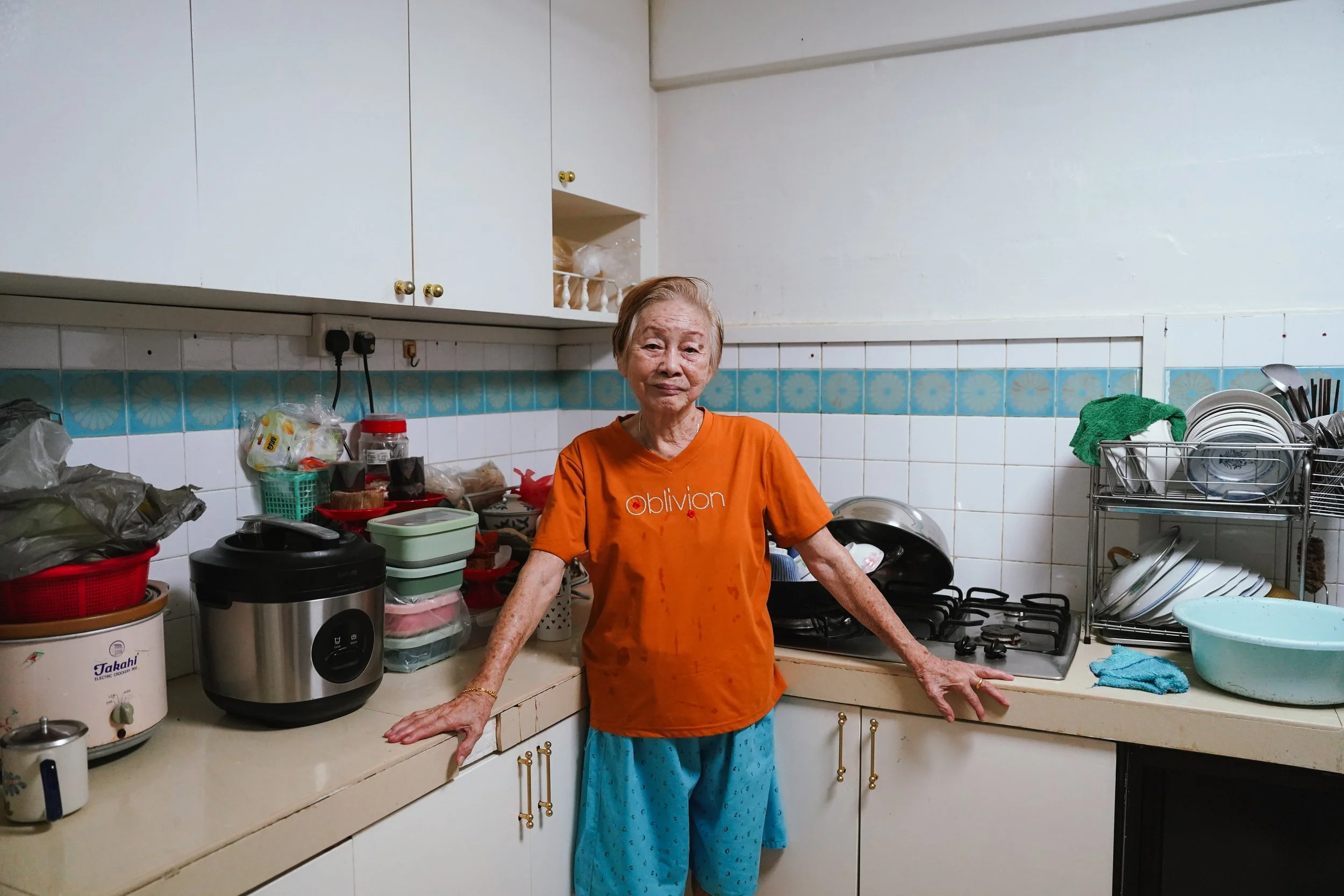
In the process of trying so hard to preserve the Popo I knew, I had overlooked something that was so much more obvious. I realised I knew remarkably little about the woman whom I am so scared of losing. I wanted to see what Popo was like before she was my grandmother, before she was my mother’s mother.
I spent countless Friday nights talking to Popo as we went through the many photo albums — that survived multiple floods and relocations — she had kept in her living room credenza all these years. We found ourselves lying on her bed going through photograph after photograph as she recalled the stories behind each picture. It was strangely familiar. I haven’t lain on this bed beside her since I was a little boy.
As we went through them, I used my iPhone to scan some of these photographs that revealed parts of her life that I had never seen before. You will encounter some of them as you scroll along this photojournal.
I recorded our conversations on voice memo too. What follows are fragments of Annie, in her own words.
01 — The Name Annie
For twenty years I knew her as Popo. I never thought of asking if anyone had known her by another name.
02 — Swimming
On her weekly trips to the beach and her near death experience.
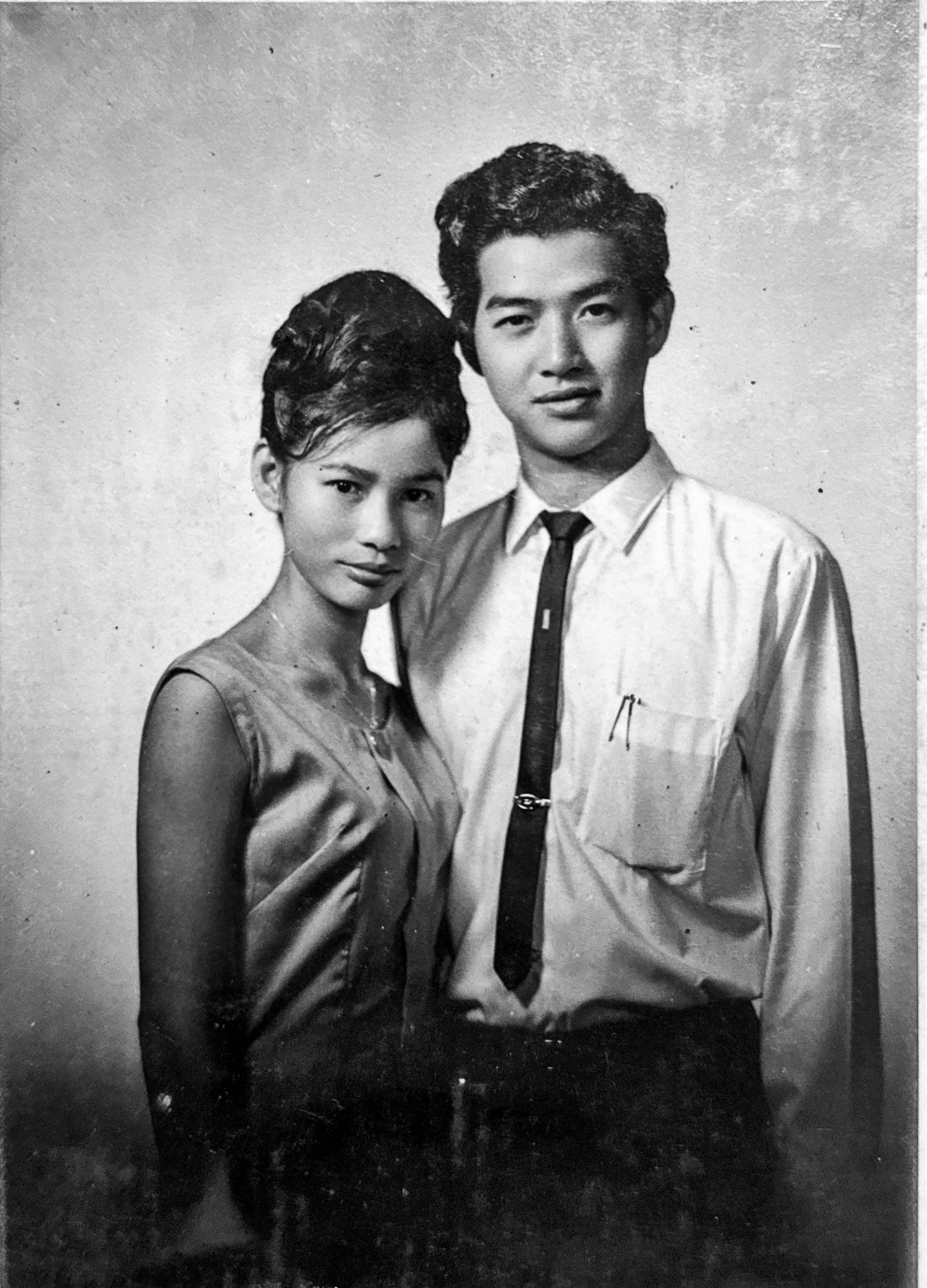
Grandma with grandpa before they got married
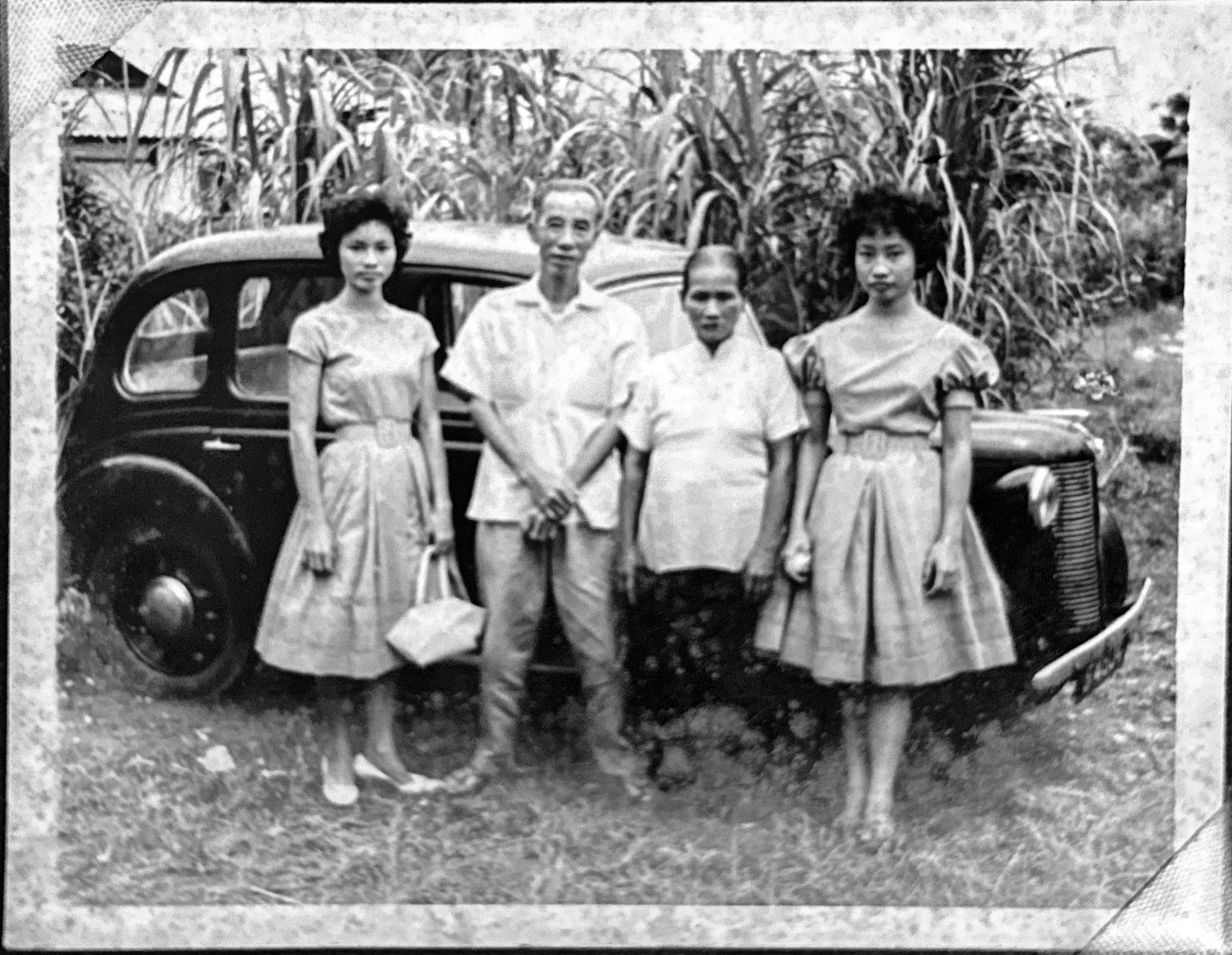
Grandma with her sister and parents
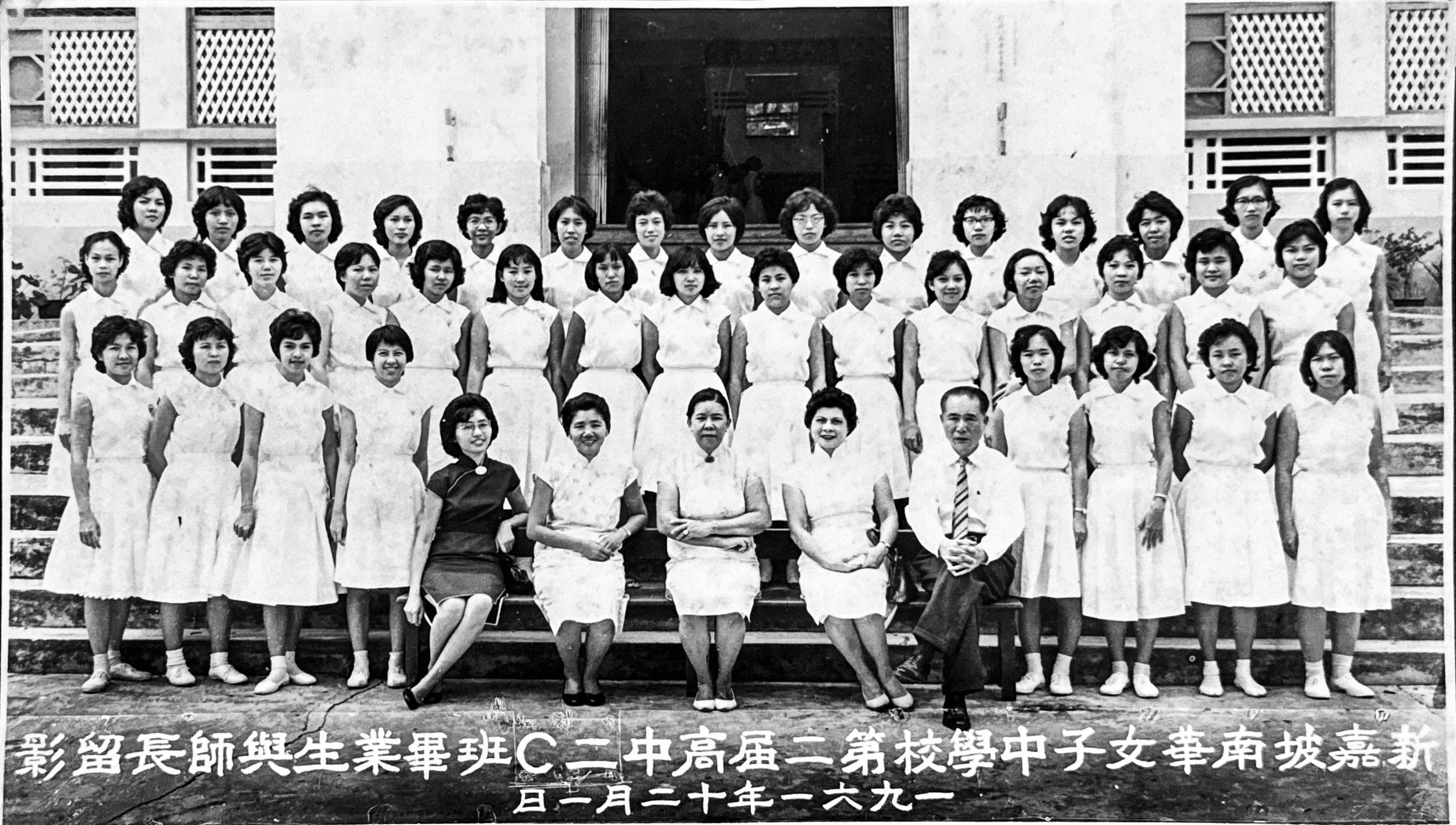
1961: Grandma’s class photo at Nan Hua High School
03 — The Schoolgirl
Popo attended Nan Hua Girls’ High School and continued her education through high school, an opportunity she remembers as uncommon for girls of her generation.
04 — An Adventurous Roadtrip
Popo recalled an all-girls trip that she went on with her friends that was more eventful than expected — windy roads and unexpected stopovers.
05 — Remembering Her Voice
I would have cut this twenty-minute recording down like the others, but I chose not to. Popo jumps from one story to another without much direction. Here’s one for the future, for when I just want to remember what her voice sounds like.
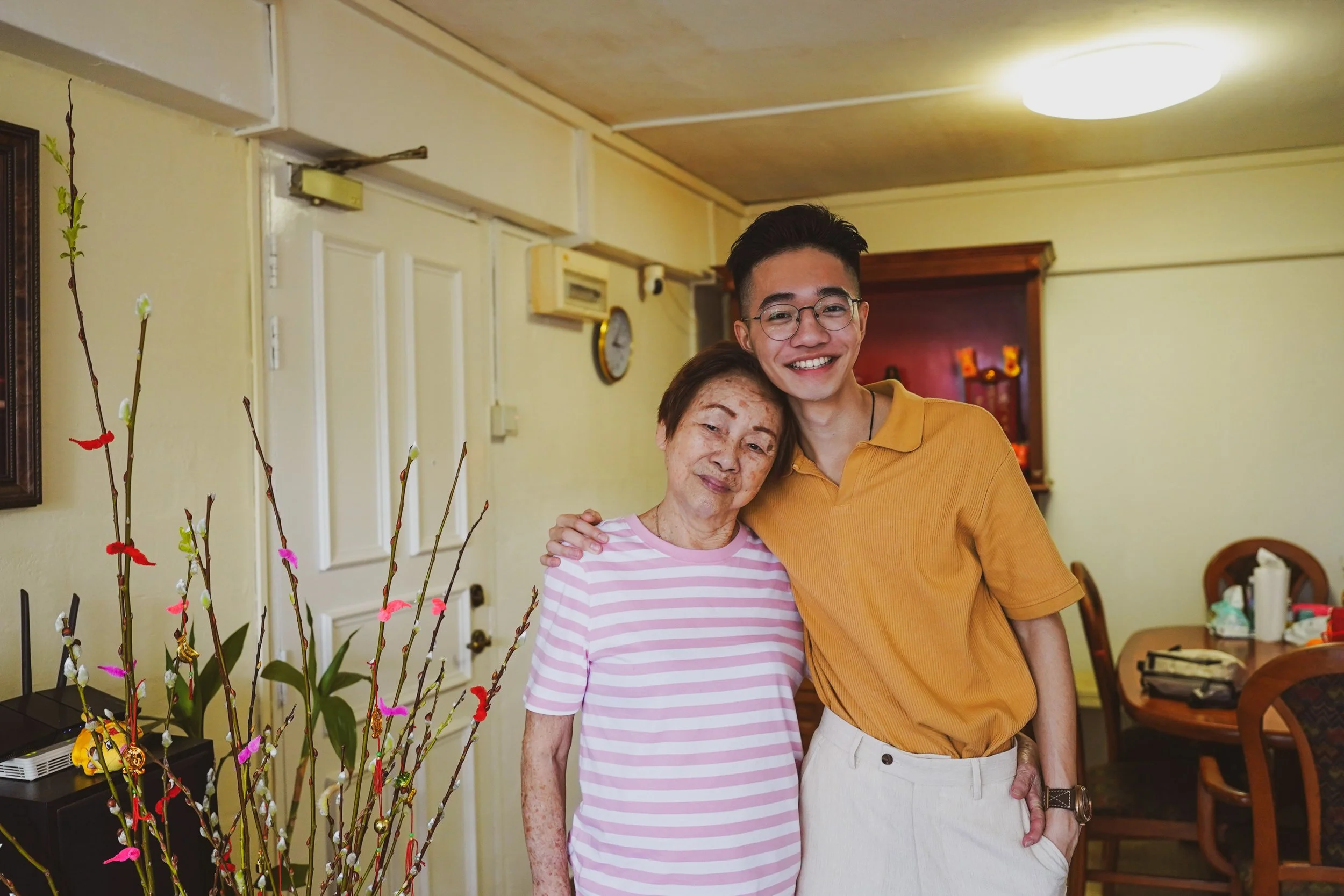
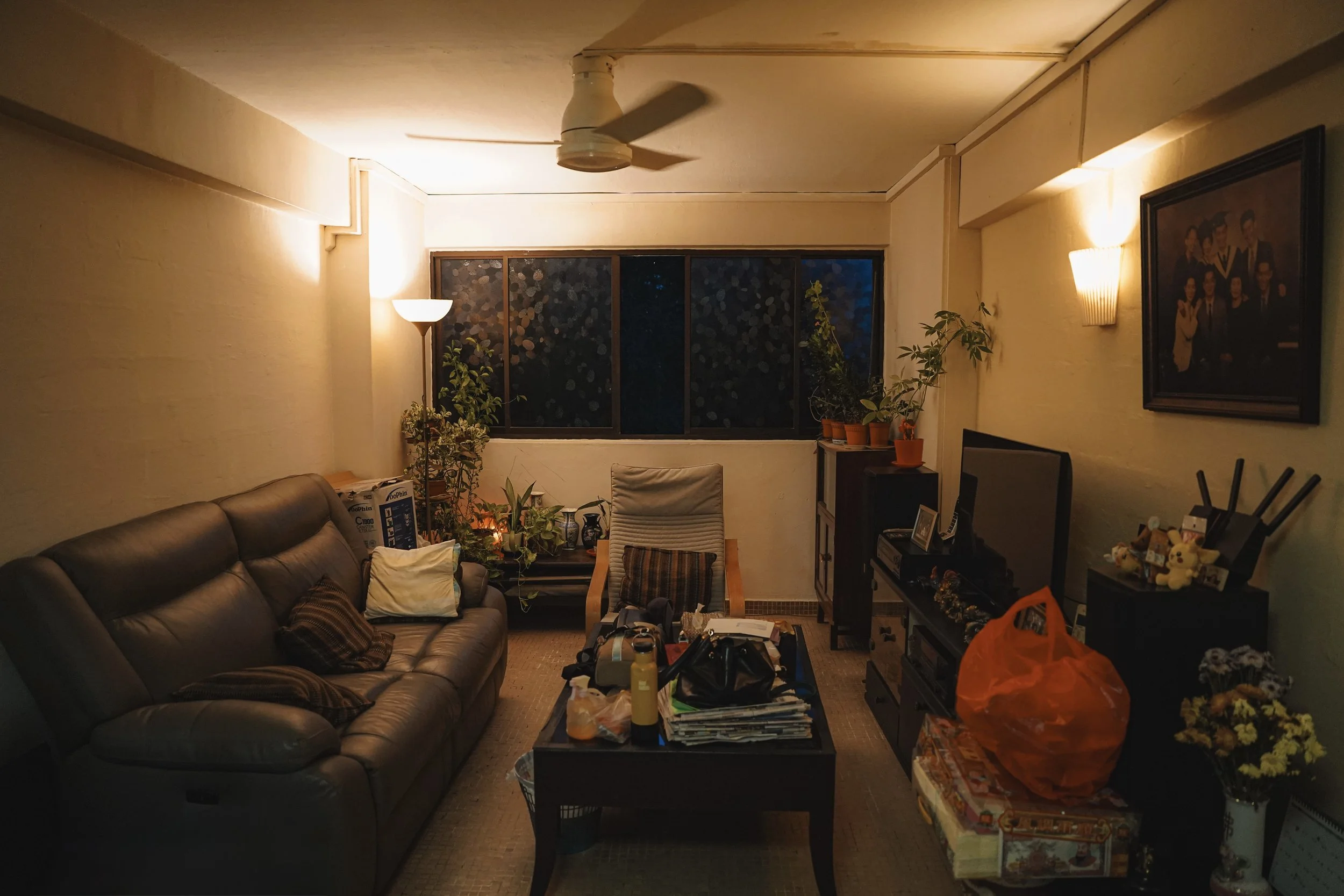
As I listened to these stories, looked through all these photographs, and watched the house gradually transform through its different iterations, it felt rather strange to realise that someone and somewhere that I had known my entire life had already lived so much before me.
Recently, her memory has started to become more frail, and that has also changed what photographing her home means to me. In the beginning, I photographed her bed, her vanity, her cushion, and her blue cup — I thought these were the things that would make me remember her. But spending these nights with her — with her voice filling the room, jumping from one story to another, the repetitive questions, the Friday dinners, and the stack of news paper on her living room coffee table that she refuses to clear — I realised that it is these small moments of frustrations, joy and the mundane that I will probably miss most about her.
The warmth I have projected onto her home was never really in the objects that reminded me of her, but the colour and light she has brought to them.
For now, this is my grandmother, and this is the home that I choose to remember her by.
06 — A call on my Birthday
Popo wishing me a happy birthday one day late.